ICME 2026 Annual Conference
ICME 2026 Annual Conference
Recovery and Regeneration
Museums as Spaces of Healing, Continuity, and Transformation
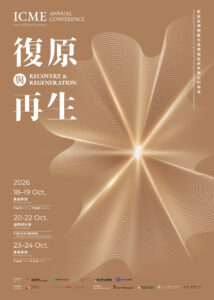
October 18-24, 2026
Kaohsiung, Taiwan
Call for Papers (English PDF)
Conference Program (2026 ICME Annual Conference Program)
About the Conference
The 2026 ICME Annual Conference, to be held in late October in Taiwan, will be the first ICME annual conference convened in the Asia–Pacific region in nearly two decades—an important moment for the global ethnographic museum community. Hosting the conference in Taiwan, a place shaped by layered histories, Indigenous presence, and vibrant cultural diversity, provides a meaningful setting for considering how museums can more responsibly engage with contemporary social, cultural, and political transformations.
In alignment with ICME’s commitment to human rights, community collaboration, and the critical reassessment of colonial and exclusionary legacies, the conference offers a vital platform to explore how museums recover marginalized voices, regenerate cultural knowledge, and support living traditions in a rapidly changing world. By gathering in Taiwan, ICME members can collectively advance practices that foster intercultural understanding, ethical stewardship, and innovative responses to the evolving needs of communities worldwide.
At the same time, we continue to reflect on the term “ethnographic” and its meanings within contemporary museum discourse, recognizing its varied interpretations and historical weight across different regions and communities. In this spirit, the conference welcomes contributions that foreground locally grounded narratives, community perspectives, and more inclusive approaches to culture and heritage.
About Taiwan and its People
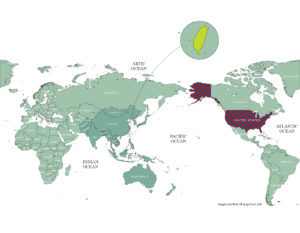
Taiwan (formerly known as Formosa) is an island nation in the western Pacific known globally for its economic accomplishments, high-tech industry, and robust democracy. Beneath these headlines is a deeper history shaped by migrations of people and contested territorial claims. For at least 6,000 years, Taiwan has been home to a diverse array of Indigenous Peoples who are linguistically and culturally related to Austronesian-speaking populations across Southeast Asia and Oceania. These groups vary widely in language, social organization, governance, and ways of life.
For millennia, Indigenous Peoples coexisted on Taiwan, often in tension, but the arrival of Western and East Asian powers in the 17th Century brought sweeping changes. A succession of foreign powers, including the Dutch East India Company (1624-1662), Spanish (1626-1642), Ming loyalists (1661-1683), Qing dynasty (1683-1895), Imperial Japan (1895-1945), and the Republic of China (ROC, 1945-present), sought to exert their influence over Indigenous territories and introduced measures to classify and manage the Indigenous population. Dutch traders signed treaties with local communities and ruled indirectly through appointed chieftains. Qing officials introduced derogatory classifications by labeling Indigenous groups as “raw savages” and “cooked savages” and dug boundary trenches to separate Chinese settlers and Indigenous Peoples. Under Japanese rule, Indigenous communities were forcibly relocated to lower elevations for monitoring. Resistant Indigenous groups in the north were quarantined by electrified fences and Imperialization campaigns encouraged Indigenous persons to adopt Japanese names, language, customs, and religious practices. After World War II, the ROC implemented martial law and launched a program of “White Terror” targeting political dissidents, including Indigenous leaders. Taiwan’s democratization in the 1980s coincided with the rise of a global Indigenous rights movement, and Indigenous voices began to emerge. While Indigenous Peoples now enjoy political, civic, social, and economic rights, they are still far from their goal of nation-to-nation relations with the government.
Today, approximately 546,700 Indigenous persons live in Taiwan, comprising 2.3 percent of a population that is over 95 percent Han Taiwanese. The ROC government recognizes sixteen Indigenous groups: Amis, Bunun, Hla’alua, Kanakanavu, Kavalan, Paiwan, Pinuyumayan, Rukai, Saisiyat, Sakizaya, Seediq, Tao, Atayal, Thao, Truku, and Tsou. Members of these groups take pride in their Indigenous heritage and identities, and they are increasingly visible in popular music, sports, politics, and films. Yet other groups, like the plains-dwelling pingpuzuqun, continue to fight for official recognition and the preservation of their cultures and rights.
Recovery and Regeneration: Museums as Spaces of Healing, Continuity, and Transformation
Recovery represents the active retrieval of what has been taken, lost, archived, or forgotten. Regeneration, in turn, signifies the renewal and transformation of that knowledge into vibrant, living cultures. Together, they form a continuous cycle of cultural survival, resurgence, and innovation.
Recovery calls for a return to community, to collective memory, and to stories handed down through generations. It is an act of resistance and resurgence—reclaiming space through language, cultural identity, and spiritual connection. It confronts the historical and ongoing dispossession and disruption of peoples from their lands and environments, while addressing the threats to cultural expression, belief systems, and visual languages.
Regeneration builds upon the foundational work of reclamation. It breathes new life into reclaimed knowledge and practices, sustaining cultural identity through intergenerational exchange, creativity, and healing. It nurtures both land and spirit, envisioning futures grounded in care, transformation, and renewal.
Together, Recovery and Regeneration open pathways for exploring the following sub-themes:
1. Recovering Community Voices: Exploring how museums collaborate with communities to recover stories, languages, and identities that were silenced or marginalized.
2. Regenerating Cultural Practices: Examining how museums move beyond collection and conservation to support the renewal of living traditions and creative cultural practices.
3. Decolonizing Collections: Ethics of Return, Reconnection, and Care Investigating the processes of restitution, repatriation, and the regeneration of meaning in ethnographic collections.
4. Memory, Trauma, and Recovery: How museums engage with histories of displacement, loss, and survival, and contribute to individual and collective healing.
5. Regenerative Curatorship: Co-creation and Intergenerational Knowledge Discussing curatorial approaches that sustain cultural continuity through collaboration, dialogue, and creative exchange.
6. Digital Recovery: Reclaiming and Reanimating Cultural Archives Addressing how digital technologies can recover dispersed or endangered heritage and generate new forms of access and storytelling.
7. Regeneration through Art and Design: Showcasing artistic practices that reinterpret traditional forms, materials, and symbols to express contemporary cultural resilience.
8. Empowering Youth: Regeneration as Imagination and Vision Envisioning museums as spaces for imagining futures grounded in cultural continuity, innovation, and care for the next generations.
Conference Schedule
October 18–19: Museum visits and professional exchange in northern Taiwan
October 20–22: Conference sessions and meetings in southern Taiwan
October 23–24: Visits and cultural exchange with Indigenous and local communities in eastern Taiwan
Proposals
The committee calls for a variety of proposed contributions, including papers, posters, roundtables, and panels from colleagues who work on collections, exhibitions and programming that aim to diversify audiences and reconsider interpretive practice, whilst valuing and respecting traditional heritages and practices. Proposals for papers (15 minutes or less) or panels (60 minutes or less) should not exceed 300 words.
Proposals will be submitted through a dedicated conference website listed below.
https://2026icme.org.tw/index.html
Participation Formats and Instructions
Prospective presenters are encouraged to help shape the conference and contribute through:
Oral presentations (paper presentations – max. 15 minutes)
Digital posters Short videos
Highlight sessions (Ignite Talks)
The following information should be included with the abstract proposal:
• Title of submitted proposal
• Indicate if it is a paper, panel session or workshop
• Name(s) of Author(s) or presenters
• Affiliation(s) & full address(es)
• Position
• ICOM membership number (membership is not required)
• ICME Member yes/no (membership is not required)
• Technical requirements for the proposed presentation
• 150-word short biographical statement for each presenter
All proposals must be submitted through the conference website by May 10, 2026.
A copy of the proposal should be sent to icom.icme@gmail.com by May 10, 2026, midnight CET.
Accepted proposals will be notified by June 15, 2026.
Acceptable formats are Microsoft Word (.docx) and PDF. The abstract language must be submitted in English. Presentations will be delivered in English or Mandarin during the Annual Conference.
We hope that you join us in person at the meeting. We invite international proposals that focus on ethnographic, anthropology, world culture or society museums. However, we would like to hear from colleagues working in or on museums and museological issues, views, or topics of every kind. We are keen to review issues of coloniality, indigeneity, diversity, (in)equality and social justice. Submissions may be edited by the Conference and Scientific Committees for the program booklet.
Important Dates
• February 28, 2026: Call for Papers announcement
• March 20, 2026: Call for Papers officially opens
• May 10, 2026: Abstract submission deadline
• June 15, 2026: Review results announced and registration opens
• September 15, 2026: Deadline for full papers, presentations, and digital works
Travel Grants for Taiwan
Travel Grants for the ICOM ICME 2026 Taiwan Annual Meeting
Application Period: 15 June – 31 July 2026
Announcement of Results: 15 August 2026
ICOM ICME will award one (1) travel grant to a member who has been accepted to present a paper at the ICOM ICME 2026 Taiwan Annual Meeting.
One (1) grant will be awarded (1 × 1,200 €).
Priority may be given to early-career scholars and applicants from underrepresented regions, in line with ICOM principles.
⸻
Note:
The grant may only be used for travel-related expenses (e.g., airfare and accommodation) and may not be used for conference-related social events. The grant will be reimbursed after the conference, based on valid receipts submitted, and only up to the awarded amount. The grantee is responsible for paying their expenses in advance and submitting all receipts after the event for reimbursement.
⸻
Eligibility Criteria:
• Has been accepted to present at the ICOM ICME 2026 Taiwan Annual Meeting
• Is able to understand and communicate in English
• Is a museum professional or equivalent
• Is an individual member of ICOM and ICME
• Is in good standing with membership dues
• Has not received an ICME travel grant in the past three years
⸻
Application Materials:
Please submit your application via the designated link, including:
• Completed and signed application form
• A statement (max. 500 words) outlining your motivation for attending and expected benefits
• Curriculum vitae (maximum one page), including education, work experience, publications, and current responsibilities
• A copy of a valid travel document (passport or ID card)
⸻
The grantee will be required to submit a brief report and/or complete a questionnaire within two weeks after the meeting, describing their experience and contributions to ICOM activities.
We sincerely hope you will join us in Taiwan for this important gathering. Your participation will help shape critical conversations and future directions for museums and cultural institutions worldwide.
Should you have any questions, please do not hesitate to contact us. We look forward to welcoming you to Taiwan in October 2026.
Sing-Da Huang
Conference Chair
ICME 2026 Annual Conference